Mapping My Digital Identity
Over the last week, I’ve been thinking more intentionally about how I exist online. I’ve always had a sense of what’s personal vs. professional when it comes to my digital identity, but mapping it out really helped me visualize how much of my digital life sits somewhere in the middle.
My Digital Map
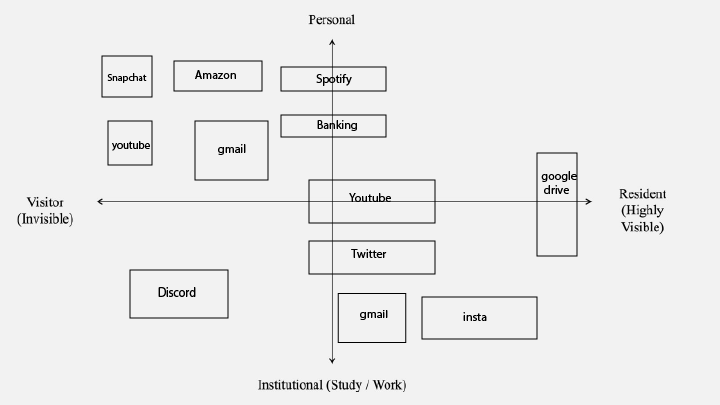
Creating my own Visitor and Resident map gave me a clearer sense of how I move between online spaces. For example, Snapchat, Amazon, my personal Gmail, and my private Instagram all sit in the top left quadrant, firmly in the visitor and personal zone. I go in, do what I need, and leave. These spaces are private, and I’m not really participating in a way that builds a digital presence.
But on the flip side, I’ve got things like my public Instagram (a creator/business account), my music YouTube channel, and a separate Gmail address that I use professionally, all of which fall into the resident/institutional zone. These are platforms where I engage more consistently and intentionally. Whether it’s posting beats, replying to messages, or sharing updates, these spaces shape how I’m seen online, not just by friends, but by potential collaborators, classmates, and even employers.
I’ve added my full map as an image below. It helped me realize that I’m more of a resident than I thought, especially in the spaces where I’m building something creatively.
Personal vs Professional & Drawing The Line
I’ve always separated my personal and professional identities online. I have two different Instagram accounts, one for personal posts with friends, and one public-facing account for music and brand-building. I have two emails, one for personal accounts and services, and one for public use thats used for business accounts and available to the public. On the business side, I’m much more careful about how I come across. I’ll delete a beat if I don’t think it holds up anymore. I’ll reword captions if they sound off. I’m not trying to be overly calculated, but I do think about how people perceive what I post.
It’s not just about being “professional”, it’s about being intentional. I want to make sure that if someone looks me up, whether it’s a peer or someone who might want to work with me, what they find actually reflects the effort I put into my creative work. At the same time, I want my public identity to still feel real and not overly curated. It’s a balance I’m still figuring out.
Personalized Learning
One of the biggest advantages of digital life for me is how much it supports personalized learning. I’ve talked before about how I started learning music production on YouTube, but what stands out more now is how self-directed the whole process has been.
I’m not following anyone else’s curriculum. I learn what I want to learn, whether that’s how to sample properly or how to make beats in a certain style. I also learn through Instagram Reels or TikTok clips, where someone breaks down a technique or a sound in 30 seconds. It might seem shallow, but it’s often just enough to spark an idea or point me in a direction I want to explore deeper. Instagram and TikTok also can randomly spark ideas or inspiration even when I’m not looking for it and I’m just scrolling recreationally.
This approach connects with what we’ve learned about Constructivist theory, where learners actively build their own knowledge based on experience and interest. I’m not passively receiving information; I’m choosing what matters to me and going after it.
Privacy, Surveillance, and My Digital Footprint
I wouldn’t call myself paranoid, but I’m definitely more aware of my digital footprint now than I was a few years ago. I use a browser called Brave which has a built in ad-blocker and enhanced privacy features, and I try to keep my passwords varied (even though I just rely on iCloud’s password manager most of the time).
I haven’t had a major privacy scare, but I’ve had some unimportant accounts hacked before and seen enough people have theirs hacked to know it’s worth being careful. I also avoid linking my private accounts to anything public, and I keep my personal profiles locked down. Even when I post publicly, I try not to overshare. Another thing I avoid is clicking on unknown links as they can be phishing scams, I always make sure I trust the source of the link or I avoid it.
Every post, like, or comment leaves a trace, and in creative fields like music, your digital presence is often the first impression someone gets of you. I want mine to be solid, not just for others, but so that it reflects who I actually am and the kind of work I care about.
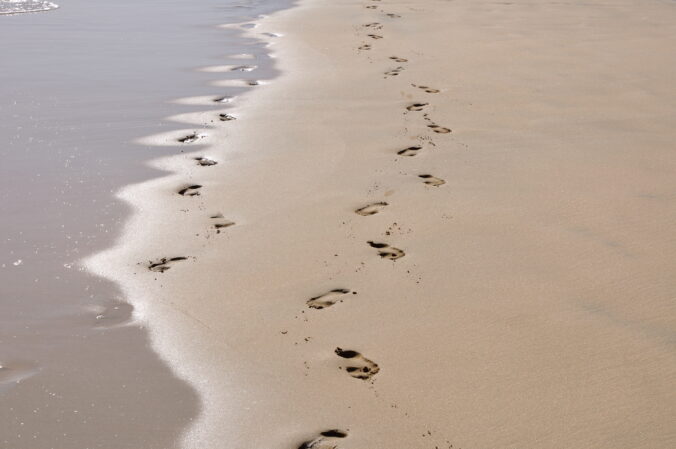
“Your digital footprint is more permanent than a footprint in the sand. It doesn’t get washed away by the next wave.” – Unknown
Final Thoughts
Working on this blog post made me reflect on how much overlap there is between personal and professional online life. They’re not always separate, and that’s okay, but being intentional about what you share and where you share it is what really matters.
YouTube Instagram TikTok
Recent Comments